Lyman Houghton
Agroforestry, ʻulu propagation, and cooperative food systems on Hawaiʻi Island.
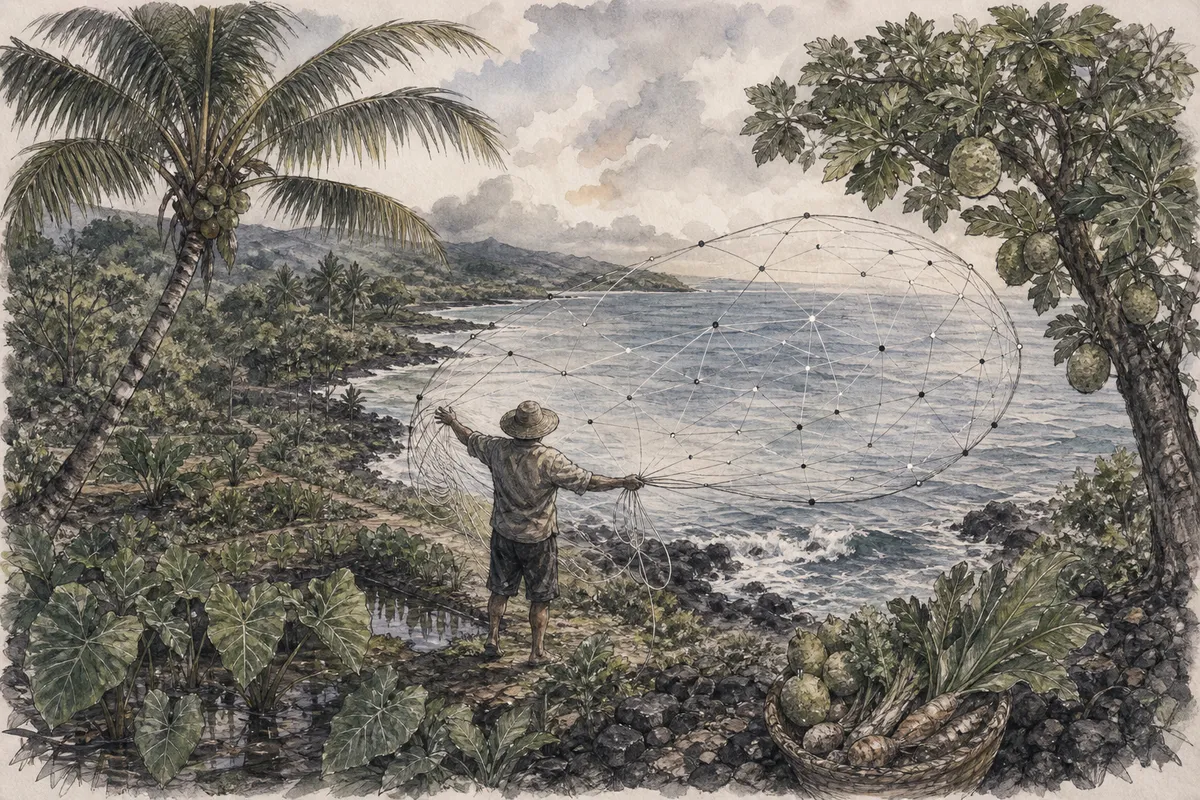
One cast feeds many. That's the whole idea
I work at the intersection of agroforestry, food sovereignty, and cooperative development on Hawaiʻi Island - growing ʻulu, building farmer networks, and helping community food systems take root for the long term.
This work happens in relationship: with the land, with the farmers and cooperators I work alongside, and with the knowledge systems that were caring for this ʻāina long before I arrived. I don't claim to speak for Hawaiian culture - I aim to listen to it, learn from it, and build in ways that honor it.
Hoʻina Ka ʻĀina Collective
The organizing hub for this work — bringing agroforestry, cooperative development, and community food systems together under one roof.
Farmers' Heart
Building the cooperative structures and relationships that let small farms thrive together, not just survive alone
ʻUlu Keiki Nursery
Propagating ʻulu (breadfruit) — a resilient, calorie-dense staple crop with deep roots in Pacific food systems and real promise for climate-resilient agriculture
Background
Seventy years of hands-on agricultural experience, from childhood farm work in the continental U.S. to founding ʻUlu Keiki Nursery on Hawaiʻi Island today. Training includes GoFarm Hawaiʻi (Cohort 9), CTAHR coursework in canoe plants and native species, and Korean Natural Farming methods — alongside mentorship from Will Allen, a nationally recognized leader in community food systems. I currently serve on the board of the ʻUlu Farmers Cooperative (UFUU), East Chapter, and ʻUlu Keiki Nursery holds a confirmed purchase commitment from the Hawaiʻi ʻUlu Cooperative.
Why This Work Matters
Hawaiʻi imports roughly 85–90% of its food, leaving the islands vulnerable to shipping disruptions, climate volatility, and rising costs. Community-scale agroforestry, farmer cooperatives, and resilient staple crops like ʻulu offer a practical path toward greater food security - not as a return to the past, but as infrastructure for a more stable future.